A concrete-saw decision starts with the cut, not the blade diameter. You need to know the material, its thickness, what is inside or beneath it and what the finished opening must accomplish. Then you can compare the saw, blade, power supply and dust controls as a complete setup. A machine that looks suitable in isolation may still be wrong for a particular slab, location or work method.
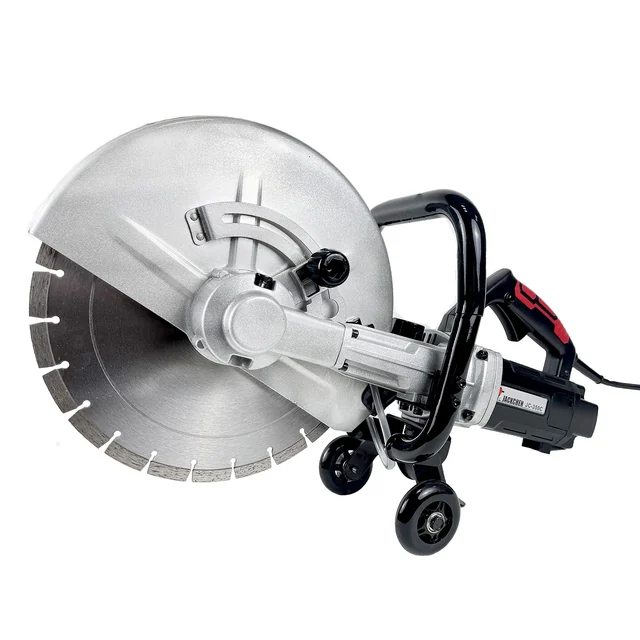
Our 14-inch electric concrete saw is a corded model supplied with a diamond blade. The selected configuration lists a 4.8-inch maximum cutting depth, a 110 V supply and a no-load speed of 4,200 rpm. Those details help identify the product. They do not replace the machine nameplate, the supplied instructions or a blade-specific compatibility check.
Use this guide to plan the purchase and the questions that need answering before work begins. It is not a cutting procedure or a substitute for training. Structural work, concealed services, hazardous materials and specialized slab construction require the appropriate professional assessment. Settling those matters first is part of choosing the right equipment.
Define what the cut must do
A shallow groove, a full-depth separation and an opening for a repair are different tasks. Write down the purpose and required dimensions before choosing a tool. The plan should identify what will remain, what will be removed and how the remaining material will be supported. Without that information, a cutting-depth comparison is incomplete.
Consider whether a handheld saw is appropriate for the shape and length of the work. A short accessible cut presents different handling demands from a long straight run across a slab. Another class of equipment or a contractor may be better suited to the latter. The fact that a blade can reach a material does not establish that the complete operation is practical.
Identify the finish requirement as well. A cut that will be hidden by a repair may have different edge requirements from an exposed finished surface. The next construction stage may determine where the cut belongs and how much material can be removed. Confirm those details with the project specification before marking the surface.
Do not use a power-tool purchase to settle an unresolved design question. If the opening size, reinforcement treatment or support method is uncertain, the equipment decision should wait. A clear drawing or scope can prevent a much more expensive mistake than choosing the wrong blade.
Identify the material and hidden features
Concrete, masonry, natural stone and asphalt are not a single cutting material. A blade suitable for one application may not be suitable for another, and the saw's product category does not override the blade label. Determine the actual material and compare it with the permitted uses of both the machine and cutting accessory.
A slab can also contain reinforcement, services or a specialized structural system. Never assume that a plain-looking surface is safe to cut through. Post-tensioned concrete, embedded utilities and structural elements require particular assessment and methods. If the construction is unknown, use qualified help to identify it before proceeding.
For exterior work, consider what lies below the cutting area. Utility records and locating requirements may apply, and private services may need separate investigation. The surrounding ground and nearby structures can also affect how a removed section behaves. A small opening is not automatically a simple one.
Record the information you have and the questions that remain. A contractor or equipment supplier can give a more useful answer when you can describe the material, thickness, access and intended result. A photograph alone often cannot establish these details, especially when the important features are hidden.
Distinguish blade diameter from cutting depth
A 14-inch blade does not make a 14-inch-deep cut. The mounting arrangement, guard and machine geometry limit the part of the blade that can enter the material. Our selected JACKCHEN saw lists a maximum cutting depth of 4.8 inches. Use that figure as a model specification, then check the actual job and the manufacturer's operating requirements.
Do not plan a critical cut exactly at a limit without understanding the conditions attached to it. Blade wear, the workpiece, access and the prescribed method can affect the usable arrangement. The operator needs room to control the saw while keeping the guard and other features in their intended positions. A theoretical dimension does not account for every site constraint.
Measure the workpiece through an appropriate, safe method rather than estimating from an exposed edge that may not represent the whole area. A slab can vary in thickness. If the work depends on knowing the full section, obtain the necessary assessment. Guessing can leave an incomplete cut or create an unexpected breakthrough.
If the required cut is beyond the machine's approved capacity, choose suitable equipment. Do not remove a guard, fit an oversized blade or improvise a method to extend the reach. The blade diameter and maximum depth are limits to respect, not starting points for modifications.
| Planning question | Selected saw detail | What still needs checking |
|---|---|---|
| What blade size is specified? | 14 in diameter | Arbor, blade type and permitted dimensions |
| How deep can it cut? | Listed maximum 4.8 in | Actual material thickness and operating conditions |
| What powers it? | 110 V corded electric | Nameplate current, circuit and cord requirements |
| What speed is listed? | 4,200 rpm no-load | Blade speed rating and machine instructions |
| What comes with it? | Diamond blade | Final selected offer and replacement compatibility |
Match the blade as a complete specification
Blade selection involves more than diameter. Check the arbor connection, permitted speed, material application and wet or dry requirements against the saw instructions. The blade must be suitable for the machine and the task at the same time. A familiar package color or a broad label such as masonry is not enough to settle the match.
The included diamond blade is part of the selected configuration, but inspect its markings and instructions before use. Packaging, product descriptions and model versions can change. Confirm the actual accessory you receive rather than assuming every blade supplied under a similar title is identical. Keep its specification available for future replacement purchases.
Do not fit a blade with an inadequate speed rating or an incompatible mounting arrangement. Do not enlarge its hole, add improvised washers or alter the guard to accommodate it. Use only the configuration allowed by the saw and blade manufacturers. If the fit is unclear, ask for a specific compatibility answer.
A replacement blade should be selected from the job requirements again. The next project may involve a different material or cutting method. Reordering the same diameter can be convenient, but it does not establish suitability for a new task. Maintain a short record of the approved blade specification for the work you actually do.
Check the electrical supply from the nameplate
The selected saw is a corded 110 V model. Voltage is only part of the electrical requirement. Check the actual machine nameplate and manual for current, circuit protection, grounding and extension-cord guidance. Do not infer those requirements from a promotional wattage figure or from another tool that uses the same style of plug.
The available outlet and circuit need to suit the equipment and environment. Other loads on a circuit can matter, and a long cable run can introduce limitations. Where the supply arrangement is uncertain, use a qualified electrician rather than solving repeated trips or poor operation through trial and error. Never defeat protective devices to keep a tool running.
Choose an extension cord only when permitted and according to the specified rating, length and conditions. Inspect it before use and route it away from the blade, sharp edges, traffic and standing water. A cord that reaches the work is not necessarily a suitable cord. Keep connections arranged as required for the site and equipment.
If an approved cutting method uses water, the electrical and water arrangements must be planned together. Follow the manufacturer's protection requirements and do not improvise water delivery around equipment that is not designed for it. The presence of a diamond blade does not by itself establish that a saw can be used wet.
Plan dust control as part of the equipment
Cutting concrete and other silica-containing material can release hazardous respirable dust. This is a reason to choose the complete control setup before starting, not a cleanup issue to address afterward. A visible cloud indicates a problem, but its absence does not prove that exposure is controlled. The task and environment determine the appropriate requirements.
OSHA's handheld power-saw fact sheet explains a specified control approach using an integrated water-delivery system for relevant tasks. That guidance does not establish that every saw or every water attachment qualifies. Match the actual equipment and work method to the applicable requirements and the manufacturer's instructions.
Do not improvise a hose, spray bottle or vacuum connection and assume it delivers the required control. The system must work as intended for the tool, blade and material. Respiratory protection, when required, also involves the correct selection and use; it is not simply a matter of wearing any face covering. Obtain qualified guidance where needed.
Plan what happens to the resulting dust or slurry. Keep it out of occupied areas, walking routes and places where it can create another hazard. Follow the appropriate collection and disposal requirements. The cost and logistics of controls belong in the project budget alongside the saw and blade.
Make room for the whole operation
The work area must accommodate the operator, tool, power supply, controls and material being removed. Measure access routes and clear obstructions before the equipment is powered. A narrow gap can limit the ability to maintain the position required by the manual, even if the blade itself can physically reach the marked line.
Plan how the workpiece or remaining structure will be supported. A cut can change the way a section carries its weight. Movement can trap the blade or cause a piece to shift unexpectedly. The correct support and removal method should be established through the project plan and qualified guidance, especially for heavy or structural material.
Keep other people outside the controlled area. Noise, debris and limited visibility can make it difficult for an operator to notice someone approaching. Agree on communication and stopping procedures before work, rather than relying on a shouted warning beside a running saw. Protective equipment should match the task and site requirements.
Think through the end of the cut before beginning it. Where will the removed piece go? How will it be handled? What will prevent someone from stepping into a new opening? These questions can reveal that additional equipment or professional help is needed even when the saw capacity appears adequate.
Inspect the saw and blade before use
Compare the delivered machine with the selected model and inspect the visible components for damage. Check the guard, handles, cord, mounting area and supplied blade as directed by the manual. Keep the order details and packaging until any discrepancy has been resolved through the purchase support options.
Disconnect the power before fitting or inspecting the blade. Follow the specified installation procedure and use the correct mounting components. Do not assume a blade is correctly secured merely because it arrived attached. Shipping condition is not a substitute for the prescribed pre-use inspection.
Inspect the cutting accessory for damage and confirm its markings. A cracked, distorted or otherwise suspect blade should not be used to see whether it settles down. Resolve the issue before operation. Replacement decisions should follow the blade and machine instructions, rather than a guess about how much damage is acceptable.
Check that guards and controls function as intended. Do not remove or disable a feature because it makes a particular cut inconvenient. If the approved configuration cannot perform the planned work, change the equipment or method. The setup should fit the task without requiring a workaround to the manufacturer's limits.
Use the prescribed cutting method
Follow the operating procedure for the saw, blade and material. Maintain the required stance and grip, and use only the approach permitted by the instructions. A general shopping guide cannot supply the correct feed rate, sequence or working angle for every combination. Those details belong to the equipment documentation and appropriate training.
Do not force the tool when the cut stops progressing as expected. An unsuitable blade, changing material, trapped section or another problem may be responsible. Stop and assess the cause through a safe procedure rather than treating more pressure as the default answer. Continuing without understanding the change can make control more difficult.
Allow the blade to stop fully before moving or setting down the tool as directed. Keep the cutting area and cable route visible. Avoid distractions and do not reach into the work while a moving blade remains a hazard. A brief pause to reorganize is preferable to working around an increasingly awkward setup.
If the material or tool behaves differently from the plan, stop. Unexpected reinforcement, a hidden service, movement or an abnormal sound may require a different method or professional assessment. The value of the plan is that it gives you a basis for recognizing when the actual work has changed.
Manage the removed material
Concrete and masonry pieces can be heavy even when their dimensions look modest. Plan their handling before separating them from the surrounding material. Do not rely on being able to lift a section because it appears small on a drawing. Use appropriate equipment and assistance, and keep the route clear.
Debris management includes sharp edges, unstable stacks and openings left behind. Establish a designated collection area that does not obstruct the operator or access route. Keep people away from newly cut edges and unsupported pieces. The work is not complete when the blade leaves the material; the site still needs to be left in a controlled condition.
Follow the applicable requirements for dust, slurry and waste. Do not wash residue into an unsuitable drain or allow it to dry into a new dust source without considering the required cleanup method. The material and local arrangements determine disposal, so settle those details before producing a large volume.
Inspect the remaining surface according to the project's next stage. A repair, sealant or new construction layer may have preparation requirements that cutting alone does not meet. Keep photographs and measurements of the completed opening where they will help the next trade or inspection.
Decide whether another tool is also needed
A saw separates material along a cut. It does not automatically remove the separated piece, clear a bonded floor or prepare a granular base. Think of those as separate tasks with their own equipment requirements. This prevents an otherwise suitable saw from being judged against work it was not designed to perform.
For bonded tile and residue removal, our tile-chisel guide explains the difference between the 30 mm hex and SDS-Max accessories. A compatible hammer and chisel may form part of a renovation plan, but the right combination depends on the substrate and the removal method. Do not choose the accessory by blade width alone.
If rebuilding requires compacting loose material, a tamper attachment must be matched to an approved tool and the project's compaction requirements. A six-inch plate does not establish a structural result. Use the specified method for the base you are constructing and obtain professional guidance for load-bearing work.
For an outdoor project that continues into fencing, the post-driver planning guide covers post shape, sleeve fit and ground conditions. Cutting a surface, creating a hole and driving a post remain distinct operations. The equipment plan should make those boundaries clear.
Compare ownership with rental or professional work
Buying can make sense when you expect repeated suitable projects and can maintain and store the tool. Compare the full setup: saw, compatible blades, electrical arrangement, controls, protective equipment and waste handling. The purchase price alone does not show what it will cost to complete the work correctly.
Rental may offer access to a different machine class or local advice about the planned task. Confirm the blade arrangement, permitted materials, required controls, transport and responsibility for wear or damage. A low daily rate can be misleading if essential accessories or handling equipment are separate.
Professional cutting is worth considering when the structure, services, depth or access are uncertain. The specialist's assessment and equipment may address issues that a handheld-saw purchase cannot. This is especially relevant when an error could affect a building, utility or expensive finished area.
Use a realistic schedule. Include assessment, preparation, the cutting operation, cleanup and the next construction stage. A review describing a quick cut on one property is not a time estimate for another. Your material and site conditions should determine the plan.
Keep records for blade replacement and maintenance
Save the machine model, nameplate information, manual and approved blade specification together. Record maintenance and any replacement parts according to the instructions. This makes the next purchase more accurate and avoids relying on a faded package or a remembered diameter.
After the work, follow the prescribed shutdown, cleaning and storage procedures. Inspect the saw and blade for issues that need attention before another project. Keep damaged or questionable parts clearly separated so they cannot be mistaken for ready-to-use accessories.
Store the tool where the cord, guard and blade arrangement are protected as instructed. Transport can damage equipment even when it is not being used, so consider how it is secured and carried. A tool that performed properly on the last project still needs a pre-use check after storage.
When choosing a replacement blade, return to the actual task and the full compatibility specification. Diameter is only the first line of the comparison. Confirm material, arbor, speed and cutting method before ordering, then inspect the received accessory before fitting it.
Prepare a project handover note
When more than one person is involved, put the important decisions in writing. Record the material assessment, approved cut location, equipment model, blade specification and any areas that must remain untouched. Include the planned support and debris-handling arrangements. This helps prevent the next person from treating a partial mark or a loose blade as a complete set of instructions.
Update the note if the actual site differs from the original plan. A change in thickness, access or material may affect the equipment choice. Stop and resolve the change with the appropriate person before continuing. Keeping the original plan visible makes it easier to identify exactly what has changed and which decision needs to be revisited.
After the work, record any maintenance issue or remaining preparation task. A saw that needs inspection should be identified before it is put away. An opening that still requires protection or finishing should be handed over clearly. The purpose is simple: leave both the equipment and the project with an accurate description of their condition.
A purchase decision you can check
Before checkout, you should be able to name the material, required depth, approved blade arrangement, electrical setup and dust-control method. You should also know how the work will be supported and how removed material will be handled. If one of those answers is missing, resolve it before making the saw responsible for the whole project.
Visit the JACKCHEN concrete-saw collection to review the selected 14-inch electric model and its listed dimensions. Confirm the exact configuration, current offer and included items in the purchase tab. The best equipment choice is the one whose limits and requirements fit the work you have actually planned.